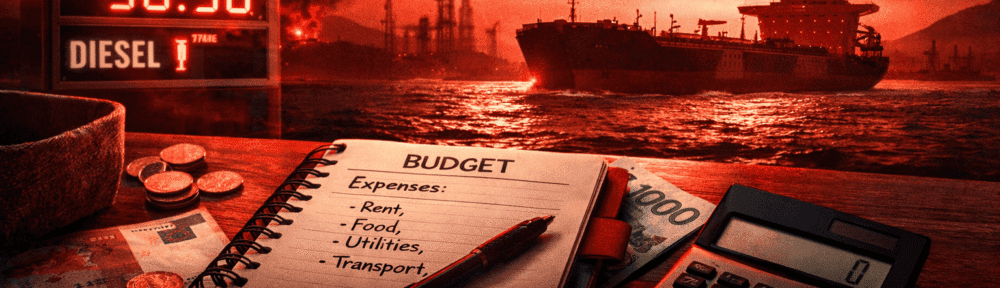
The conflict in the Middle East is thousands of kilometers away from the Philippines. But despite the distance, wars in that region almost always have a direct effect on the Philippine economy.
The reason is simple: oil.
A large portion of the world’s oil supply passes through the Strait of Hormuz, a narrow shipping route located between Iran and the Gulf countries. When tensions escalate in the region, oil supply becomes uncertain, and global prices tend to rise.
For countries like the Philippines that import most of their fuel, this can have significant consequences.
Here’s how the Middle East war could affect Filipino households in the coming months.
Higher Fuel Prices
The most immediate impact of geopolitical conflict in the Middle East is higher fuel prices.
When there are risks to oil supply, global markets react quickly. Even the possibility of disruptions can cause crude oil prices to spike.
If oil prices increase, local fuel prices usually follow.
For Filipino households, this means:
- Higher gasoline prices
- More expensive public transportation
- Increased delivery fees
- Higher logistics costs for businesses
When transportation costs go up, almost everything else becomes more expensive as well.
Rising Food Prices
Fuel prices affect more than just transportation.
Food production and distribution rely heavily on fuel. Farmers use fuel for machinery, irrigation, and transporting crops to markets. Food distributors also rely on trucks and shipping.
If fuel prices rise, food prices often follow.
This can lead to higher prices for:
- Rice
- Vegetables
- Meat
- Processed foods
For many Filipino families, food already takes up a large portion of the monthly budget. Even small price increases can make a noticeable difference.
Higher Electricity Costs
Electricity prices in the Philippines are also linked to global energy prices.
Many power plants rely on imported fuel such as coal, natural gas, and oil. If global energy prices increase, power generation costs may rise as well.
In the past, global energy shocks have led to higher electricity rates for consumers.
For households, this could mean:
- Higher Meralco bills
- Increased electricity costs for businesses
- More expensive goods and services
Possible Inflation Increase
When fuel, food, and electricity prices rise at the same time, it can lead to higher inflation.
Inflation simply means the overall increase in prices across the economy.
For Filipino households, inflation can reduce purchasing power. The same salary buys fewer goods and services.
Common signs of inflation include:
- Groceries becoming more expensive
- Higher transportation costs
- Rising utility bills
Even if wages remain the same, the cost of living increases.
Impact on Overseas Filipino Workers (OFWs)
The Middle East is home to millions of Overseas Filipino Workers.
If the conflict expands or destabilizes certain countries, it could affect OFWs working in the region.
Possible risks include:
- Job disruptions
- Safety concerns
- Temporary evacuations
- Delayed remittances
However, it’s important to note that not all Middle Eastern countries are directly involved in conflicts. Many OFWs continue working normally even during regional tensions.
Still, geopolitical instability always introduces some level of uncertainty.
Impact on Investments
Wars and geopolitical conflicts often cause volatility in financial markets.
Some investments may decline temporarily, while others may benefit.
For example:
Investments that may struggle:
- Airline stocks
- Tourism-related businesses
- Transportation companies
Investments that may benefit:
- Oil and energy companies
- Gold
- Certain commodities
For long-term investors, short-term market volatility is normal. Panic selling during global crises is usually not a good strategy.
What Filipino Households Can Do
While global events are beyond our control, households can still take steps to prepare financially.
Here are a few practical strategies.
1. Build or Strengthen Your Emergency Fund
An emergency fund can help cover unexpected expenses if the cost of living rises.
A common recommendation is to save three to six months of living expenses.
2. Reduce Unnecessary Expenses
During periods of rising prices, reviewing your budget becomes more important.
Simple steps can help reduce spending:
- Limit impulse purchases
- Reduce dining out
- Use public transportation when possible
- Monitor electricity consumption
Small adjustments can add up over time.
3. Focus on Long-Term Investing
Market volatility often scares new investors. But historically, markets tend to recover over time.
If you’re investing regularly in vehicles like stocks, bonds, or government programs such as Pag-IBIG MP2, maintaining a long-term perspective is usually more important than reacting to short-term news.
The Bottom Line
Conflicts in the Middle East may seem distant, but their economic effects can reach countries around the world, including the Philippines.
Higher oil prices can lead to increased fuel costs, rising food prices, more expensive electricity, and higher inflation.
While these developments can affect household budgets, the best approach is preparation rather than panic.
Maintaining an emergency fund, managing expenses carefully, and focusing on long-term financial planning can help Filipino households navigate uncertain global events.
Blogger’s Corner
Global conflicts are unpredictable, and markets often react quickly to bad news. However, it’s important to remember that economic shocks come and go.
Oil prices have surged many times in the past due to wars or supply disruptions, but economies eventually adjust.
For ordinary Filipinos, the most practical strategy is simple: stay financially resilient. Build savings, avoid excessive debt, and invest consistently for the long term.
Doing these things matters far more than trying to predict global events.