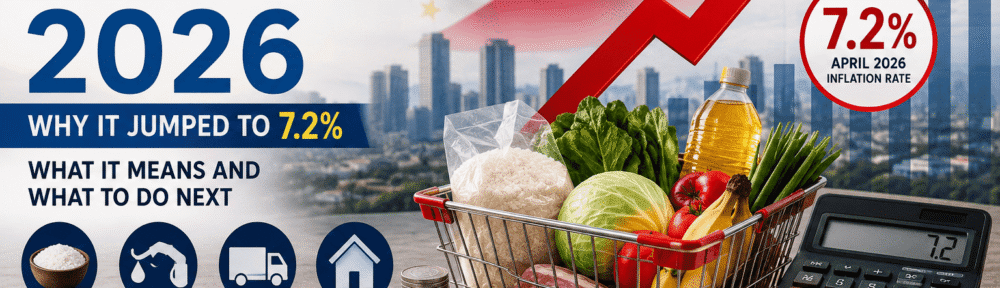
Inflation in the Philippines accelerated sharply in April 2026, marking one of the most significant price increases in recent months. After a relatively stable start to the year, the sudden spike reflects rising pressure from food, energy, and transport-related costs.
This article breaks down the inflation figures, the real drivers behind the increase, and what individuals should do from a personal finance perspective.
Latest inflation figure
According to the Philippine Statistics Authority (PSA):
- April 2026 inflation: 7.2% year-on-year
This means goods and services were, on average, 7.2% more expensive compared to April 2025.
Monthly trend:
- January 2026: ~2.0%
- February 2026: ~2.4%
- March 2026: ~4.1%
- April 2026: 7.2%
The data shows a rapid acceleration in price pressures within a single quarter.
Year-to-date inflation
Despite the spike in April, earlier months were relatively stable:
- Year-to-date (Jan–April 2026): ~3.9%
This means inflation pressure is recently concentrated, not evenly spread across the year.
What drove inflation higher?
1. Food inflation (primary driver)
Food remains the largest contributor to inflation due to its weight in household spending.
Key drivers:
- Higher rice and staple prices
- Increased vegetable and fish costs
- Supply-side constraints and higher production costs
Food inflation has the strongest impact on overall CPI because it affects nearly all households directly.
2. Energy and oil-related pressure (key trigger)
A major factor behind the inflation spike is global energy movement.
Context:
- Global oil prices rose due to geopolitical tensions affecting supply routes
- Markets priced in risk related to Middle East instability
- The Philippines, being import-dependent on oil, experienced higher fuel costs
This impacted:
- Transport and logistics costs
- Food distribution costs
- General production expenses
Oil acted as an upstream cost shock, spreading across multiple sectors.
3. Transport and logistics (cost pressure, not fare hikes)
Transport inflation increased, but it is important to clarify:
- There were no broad, immediate jeepney or bus fare increases driving this spike
- The increase came mainly from higher fuel and operating costs
- Logistics and delivery services adjusted pricing more quickly than regulated fares
So transport inflation reflects system-wide cost pressure, not just visible fare changes.
4. Housing and utilities
Additional contributors include:
- Electricity and energy-related adjustments
- Fuel-linked utility costs
- Housing-related expenses
Why inflation jumped from 4.1% to 7.2%
The sharp increase reflects a cost-push inflation cycle, where multiple sectors rise simultaneously:
- Food prices increase (largest weight)
- Fuel and energy costs rise
- Transport and logistics follow
- Utilities adjust upward
This creates a fast, compounding inflation effect.
What to expect in the coming months
1. Inflation likely to remain elevated short-term
Expect inflation to stay above target temporarily due to:
- lingering food price pressure
- ongoing fuel volatility
- delayed normalization of supply conditions
Some forecasts suggest inflation may average higher than earlier expectations if global conditions remain tight.
2. Oil remains the biggest variable
Future inflation direction depends heavily on:
- global crude oil prices
- geopolitical stability in key supply regions
- OPEC production decisions and global demand
If oil stabilizes, inflation pressure may ease. If not, inflation may stay elevated longer.
3. Food inflation may remain sticky
Even if fuel stabilizes, food prices may:
- adjust slowly downward
- remain elevated due to supply constraints
- continue contributing to baseline inflation
4. Policy response will stay cautious
Central bank policy is expected to remain:
- data-driven
- focused on inflation control
- cautious about premature easing
What people should do during high inflation (finance perspective)
Inflation is not just an economic statistic — it directly reduces purchasing power. Here’s how individuals should respond:
1. Avoid keeping too much idle cash
Cash loses value during inflation.
If inflation is ~7%, and savings earn low interest, real value declines.
👉 Consider:
- higher-yield savings options
- short- to medium-term investment vehicles
- keeping only necessary liquidity in cash
2. Rebalance emergency funds
Emergency funds remain essential, but efficiency matters:
- Keep 3–6 months of expenses
- Avoid over-allocating idle funds
- Prefer liquid but interest-bearing accounts when possible
3. Focus on inflation-resistant assets
To preserve purchasing power, consider exposure to:
- equities or index funds
- dividend-paying stocks
- diversified investment instruments
Goal: match or exceed inflation over time
4. Control lifestyle inflation
High inflation makes unnecessary spending more damaging.
Focus on:
- cutting unused subscriptions
- avoiding impulse upgrades
- reviewing recurring expenses
Small reductions compound meaningfully over time.
5. Increase income capacity
The most effective inflation defense is income growth.
Options include:
- upskilling for higher pay
- side income streams
- shifting toward higher-value work
👉 The goal is not just to cut costs, but to outpace inflation
6. Be careful with debt
Inflation changes debt dynamics:
- Fixed-rate loans can be manageable
- High-interest consumer debt becomes more harmful
- Borrowing for non-essential spending should be avoided
Key takeaway
The 2026 inflation spike is best understood as:
A food-driven inflation surge amplified by global oil and energy pressures, which then spread into transport, logistics, and utilities.
Oil played a key role, but mainly as a triggering cost shock, not the sole cause.
Blogger’s Corner
Inflation is more than just numbers — it is a slow erosion of purchasing power.
The 7.2% spike is a reminder that financial strategy cannot be static. Cash, savings, and spending habits must adjust when macroeconomic conditions shift.
In high inflation environments, the key advantage is not prediction — it is adaptation.