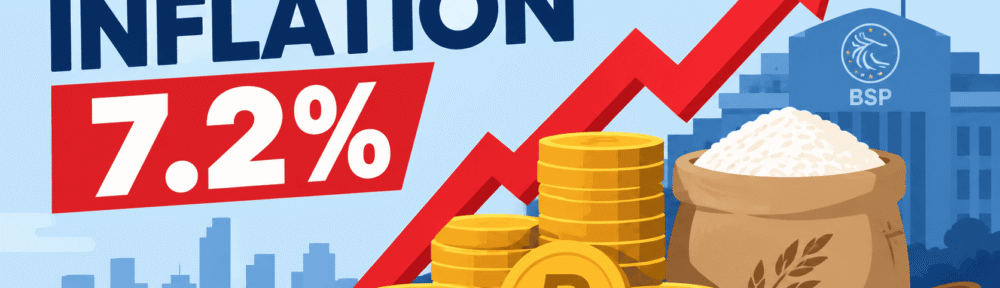
Inflation in the Philippines jumped back to 7.2% in September 2026, and the Bangko Sentral ng Pilipinas (BSP) is meeting again on October 22. If you have savings, a loan, or a paycheck that has to stretch until the next payday, this affects you directly. Here is what happened, what the BSP may do next, and what you can do about it.
The figures below come from the Philippine Statistics Authority (PSA) September 2026 release as reported by Philippine media, and from BSP statements. Check psa.gov.ph and bsp.gov.ph for the official numbers.
September 2026 Inflation: The Numbers
Headline inflation accelerated to 7.2% from 6.1% in August. That ended four straight months of easing and matched April’s three-year high. Average inflation for January to September is 5.4%, still above the BSP’s 2% to 4% target range.
Core inflation, which strips out selected food and energy items, rose to 4.7% from 4.1% in August. This matters because it suggests price pressures are spreading beyond food and fuel.
Here is where the pressure came from:
- Food inflation: 6.8%, up from 4.6% in August. Vegetables and root crops jumped 10.7%.
- Rice inflation: 20.3%, up from 19.4%.
- Transport: 14.6%, up from 13.5% in August.
The BSP had projected a range of 6.4% to 7.4% for September, so the result was within its forecast, just at the high end.
Why Prices Are Rising Again
The BSP pointed to three main drivers: weather-related increases in vegetables, fish, rice, and fruits, higher domestic fuel prices linked to the Middle East conflict, and a weaker peso. The peso hit record lows six times in the first two weeks of September, reaching ₱62.86 per dollar on September 14. A weaker peso makes imported fuel, food, and raw materials more expensive.
Economists expect more pressure ahead. Chinabank Research sees inflation peaking around November.
What the BSP Has Done So Far
The BSP has raised its policy rate three times this year, for a total of 75 basis points. The June 18 hike took the rate to 4.75%, and the August 28 hike took it to 5.0%.
The next Monetary Board meeting is on October 22. S&P Global Ratings expects another 25 basis point hike by year-end, which would put the rate at 5.25%. A larger 50 basis point move at one of the two remaining meetings has reportedly not been ruled out. The IMF, meanwhile, says further hikes should depend on whether price pressures turn persistent, and warns that the BSP faces a tough trade-off because growth is also weak. S&P cut its 2026 GDP growth forecast to 2.9%.
The El Niño Factor
BSP Governor Eli Remolona Jr. has called El Niño the scenario the central bank worries about most. Strong typhoons linked to it could push rice prices up by about 22% from December 2026 to the first quarter of 2027. In a severe El Niño, rice could rise about 40% and corn about 25% over 12 months.
The BSP’s current forecast is average inflation of 6.1% in 2026 and 5.4% in 2027, with inflation returning to the target range around the fourth quarter of 2027.
What This Means for Your Money
Your Savings
Inflation quietly eats your cash. If prices keep rising at 7.2% over the next year, ₱100,000 in your account will buy only what about ₱93,300 buys today, before counting any interest you earn. Compare your account’s interest rate with the inflation rate. If the gap is wide, look at options like time deposits, Retail Treasury Bonds, or other fixed-income products. Higher BSP rates can lift yields on new time deposits and government securities, but each issuer sets its own rate, so compare before you commit.
Your Salary
A wage hike loses value when prices rise faster than your pay. Read our guide to the NCR minimum wage hike and use the net salary calculator to see your real take-home pay.
Your Loans
Check whether your loan has a fixed or repricing rate. Loans that reprice with market rates can become costlier when the BSP hikes, while fixed-rate loans keep their agreed rate. Ask your lender before assuming either way.
Your Grocery Budget
Rice, vegetables, and fish are the main drivers right now. If you buy staples regularly, planning your budget around higher prices through early 2027 is safer than hoping for a quick drop.
What to Watch Next
- October 22: the BSP Monetary Board decision.
- Early November: the PSA’s October inflation release.
- Peso movement: a weaker peso adds to fuel and food costs.
- El Niño updates: rice supply and prices.
Frequently Asked Questions
What is the inflation rate in the Philippines for September 2026?
Headline inflation was 7.2%, up from 6.1% in August, according to PSA data as reported by Philippine media.
Will the BSP raise interest rates again?
Another hike on October 22 is widely expected. S&P sees one more 25 basis point hike this year, though the IMF says the decision should depend on whether price pressures persist.
What is the BSP policy rate now?
It is 5.0%, after three hikes this year totaling 75 basis points.
Why is rice so expensive?
Rice inflation reached 20.3% in September. Weather disruptions are a factor, and the BSP warns that El Niño could push rice prices higher still.
When will inflation go down?
The BSP expects inflation to peak around the fourth quarter of 2026 and return to its 2% to 4% target range around the fourth quarter of 2027.
Does 7.2% match my own cost of living?
Not exactly. It is the national average. If you spend more on food, rice, and transport, your personal inflation may be higher.
Blogger’s Corner
Kuya Well here. Honestly, 7.2% hits different when you’re the one buying rice every week. Many of us are doing the same math: sweldo hasn’t moved, pero ang presyo, umaakyat. My advice is simple. Don’t panic, but don’t leave all your pera sleeping in a low-interest account either. Check your numbers, compare your options, and keep your emergency fund where you can still reach it. I’ll update this article after the BSP decision on October 22, so bookmark it.
This article is for information only and is not financial advice. Rates and figures change, so verify with official sources and consult a licensed professional before making financial decisions.